
Reproduction in Plants
(IB Topic D3.1)
Essential Idea(s): Reproduction in flowering plants involves the transfer of pollen, fertilization of ovules, and the development and dispersal of seeds to ensure species survival and genetic diversity.
Unit Length: 3 Lessons (No AHL for this unit)
Guiding Questions
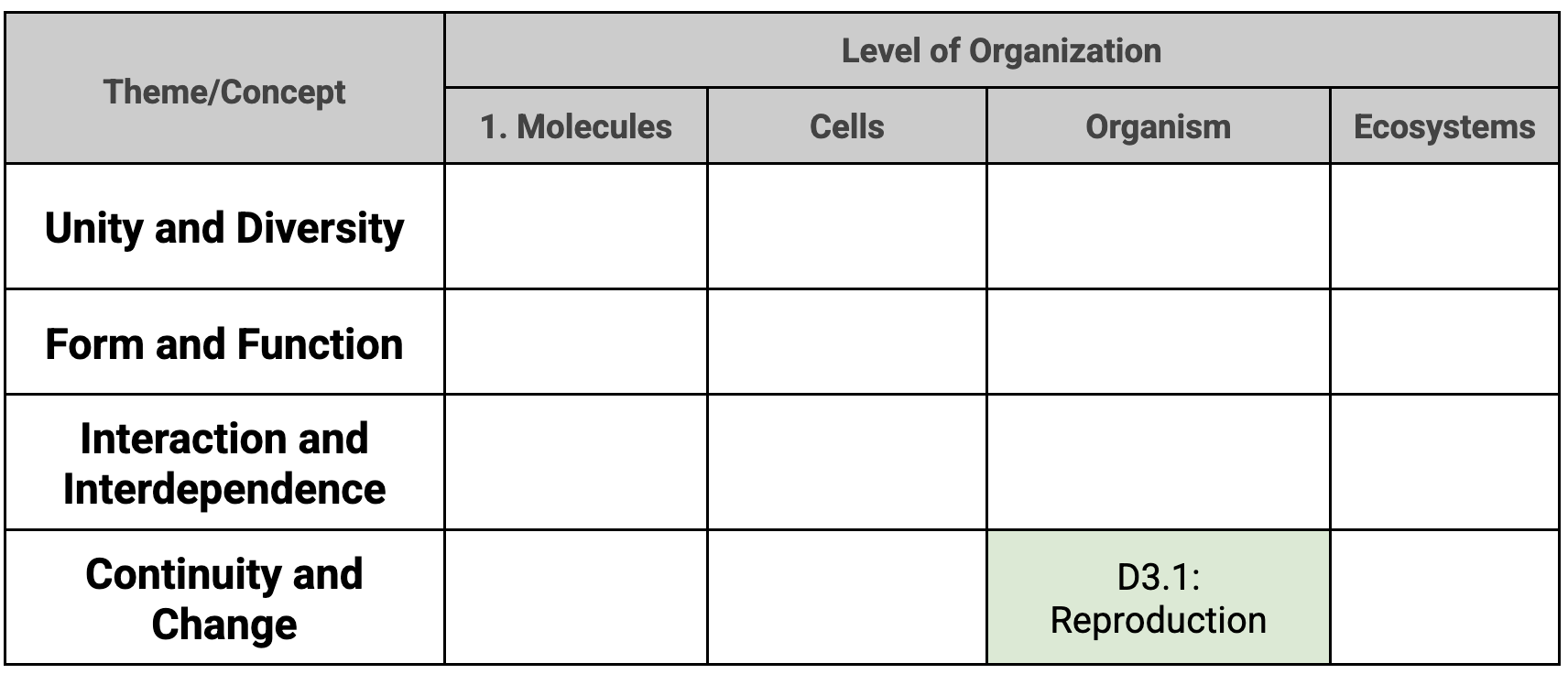
◊ How does asexual or sexual reproduction exemplify themes of change or continuity?
◊ What changes within organisms are required for reproduction?
| IB Statement(s) and Objective(s) |
|---|
|
D3.1.1: Differences between sexual and asexual reproduction
D3.1.8: Sexual reproduction in flowering plants
D3.1.9: Features of an insect-pollinated flower
D3.1.10: Methods of promoting cross-pollination
D3.1.11: Self-incompatibility mechanisms to increase genetic variation within a species
D3.1.12: Dispersal and germination of seeds
|
| Activities: ⓟ = podcast / ⍰ = inquiry 5 / ⓦ = Write it / Ӕ = The academy / Ⓡ = Read it |
|---|
|
Ⓛ: Flower Dissection (💁 / 👭 max 2) This is one of the best ways to get familiar with the various parts of a flower. Find yourself a bouquet, choose two flowers, and follow the directions in the slideshow. Complete the questions on the final slide (you can either record your answers or write them out – submit either to G. Classroom!) Watch an example flower dissection here.
Ӕ: The Academy – Angiosperm Reproduction (💁) Record a Khan Academy-style video explaining the anatomy and physiology of plant reproduction (go here for inspiration). Be sure to explain both the parts of a flower as well as those of a seed, and the key biology behind the way they work together to reproduce.
ⓡ — ⓦ/ⓟ: How Flowering Plants Changed the World (💁) There is perhaps no group of living organisms as broadly iconic as flowers: humans identify them with everything from love and passion to death and curses. This isn’t exactly surprising — flowering plants have adapted to capture the attention of all kinds of animals, including humans. In doing so, they changed how much of the living world works. Read this article on how those changes unfolded throughout history, and discuss: 1) What did the natural world look like before and after the arrival of the angiosperms? 2) How old are the angiosperms, and what tools are scientists using to answer that question? 3) How did angiosperms come to evolve and dominate in a world of conifers, ferns, and mosses?; and 4) What role did dinosaurs play in this evolution?
Ⓛ: Germination Inquiry Lab (💁 / 👭 max 2) Take on a simple task: Design an experiment to test the effect of a variable on seed germination, plant growth or response This could range from anything from acid treatment to thermal scarification. You can use any seed of your choosing, and design the experiment in any way you like. Submit a video or write up, briefly describing the variables you were investigating and the results from your lab. Include video/photos of your plants before, during, and after germination.
Ⓛ: The Baby Plant Project (💁 / 👭 max 2) Take on the role of a low-stakes parent: grab some seeds and make a “baby book” to record the development of your baby seeds as they sprout into a green plant. Document the key stages of development with a video or written document, in which you explain the anatomy and physiology of the plants in each phase of their development. |